
Blogs
Sunflower Oil: Benefits, Uses, Nutrition, and Everything You Need to Know

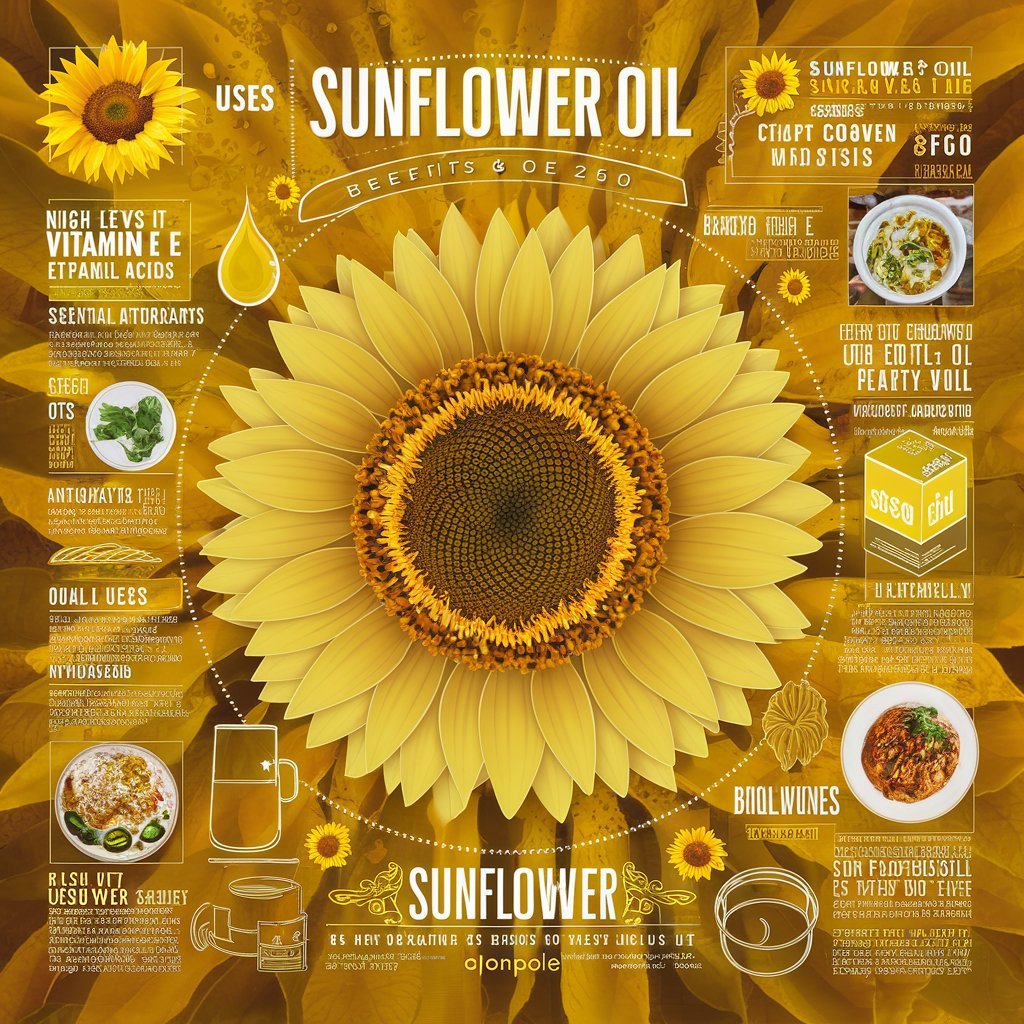
Sunflower oil is one of the most widely used vegetable oils in homes, restaurants, and food manufacturing around the world. Extracted from the seeds of the sunflower plant, it has earned a reputation for its mild flavor, light texture, and versatility in cooking. Whether you are frying foods, baking desserts, preparing salad dressings, or looking for an ingredient in skincare products, sunflower oil is often considered an excellent choice due to its balanced characteristics and nutritional profile. Over the years, it has become increasingly popular among consumers who seek a cooking oil that performs well at high temperatures while also providing beneficial nutrients such as vitamin E and healthy fats.
Modern sunflower oil is available in several varieties, including refined, cold-pressed, and high-oleic sunflower oil. Each type has unique characteristics that make it suitable for different culinary and cosmetic applications. While many people appreciate its neutral taste and cooking performance, others are interested in its potential health benefits and nutritional value. Understanding the differences between these varieties can help consumers make informed decisions about which product best fits their dietary needs and lifestyle. This comprehensive guide explores everything you need to know about sunflower oil, including its production process, nutritional content, health benefits, cooking uses, beauty applications, storage methods, possible drawbacks, and answers to the most frequently asked questions.
What Is Sunflower Oil?
Sunflower oil is a plant-based edible oil extracted from sunflower seeds. The sunflower plant has been cultivated for centuries and is now grown in many countries due to its adaptability and high seed yield. Once harvested, the seeds undergo processing to extract the oil, which may involve mechanical pressing or solvent extraction depending on the desired product. Cold-pressed sunflower oil retains more of its natural compounds because it is extracted without excessive heat, while refined sunflower oil undergoes additional processing to improve shelf life, clarity, and cooking stability.
One of the main reasons sunflower oil has become a staple in kitchens worldwide is its versatility. It has a clean, neutral flavor that does not overpower the taste of foods, making it suitable for countless recipes. It is commonly used for frying, sautéing, roasting, grilling, baking, and preparing homemade sauces and dressings. Additionally, sunflower oil serves as an ingredient in processed foods, cosmetics, soaps, lotions, hair products, and pharmaceutical formulations.
Sunflower Oil Nutrition Facts
Sunflower oil is composed primarily of fats, providing approximately 120 calories per tablespoon. Unlike many processed foods, it contains no carbohydrates, protein, fiber, or cholesterol. Its nutritional value comes mainly from its fatty acid composition and vitamin content.
One of the standout nutrients found in sunflower oil is vitamin E, a powerful antioxidant that helps protect body cells from oxidative stress caused by free radicals. Vitamin E also supports immune function, skin health, and eye health. Depending on the variety, sunflower oil contains different proportions of polyunsaturated fats, monounsaturated fats, and saturated fats. High-oleic sunflower oil contains more heart-friendly monounsaturated fats, while traditional sunflower oil is richer in polyunsaturated fats. The balance of these fats influences both nutritional value and cooking performance.
Types of Sunflower Oil
There are several types of sunflower oil available in the market, each designed for different uses and preferences.
Refined sunflower oil undergoes purification processes that remove impurities, odors, and colors while increasing shelf stability. This makes it suitable for high-temperature cooking methods such as deep frying and stir-frying.
Cold-pressed sunflower oil is extracted without excessive heat or chemical solvents, preserving more natural antioxidants and flavor compounds. It is often preferred for salad dressings, dips, and low-temperature cooking where its delicate flavor can be appreciated.
High-oleic sunflower oil is specially developed to contain higher levels of monounsaturated fats. This type offers improved heat stability, making it ideal for commercial food preparation and repeated cooking applications while maintaining a favorable nutritional profile.
Health Benefits of Sunflower Oil
Sunflower oil offers several potential health benefits when consumed as part of a balanced diet. Its healthy fat composition and vitamin E content contribute to overall wellness, although moderation remains important because it is still a concentrated source of calories.
Vitamin E is perhaps the most significant nutrient found in sunflower oil. This antioxidant helps protect cells from oxidative damage, supports healthy skin, promotes proper immune function, and contributes to maintaining healthy vision. Adequate vitamin E intake is important for people of all ages because it plays a role in protecting tissues throughout the body from environmental stressors.
High-oleic sunflower oil contains monounsaturated fats, which may support heart health when used in place of saturated fats as part of an overall healthy eating pattern. These fats can contribute to maintaining healthy cholesterol levels when combined with a balanced diet rich in fruits, vegetables, whole grains, and lean proteins.
The oil’s neutral flavor also encourages healthier home cooking by providing a versatile alternative to fats that are higher in saturated fat. Whether used for roasting vegetables, grilling lean meats, or preparing homemade sauces, sunflower oil can be incorporated into numerous nutritious meals.
Cooking Uses of Sunflower Oil
One of the greatest advantages of sunflower oil is its remarkable versatility in the kitchen. Its light taste complements virtually every cuisine without overpowering natural flavors, making it suitable for everyday cooking as well as gourmet recipes.
Because refined sunflower oil has a relatively high smoke point, it performs well during frying, sautéing, and roasting. Foods develop a crisp texture while retaining their natural flavor. Bakers also appreciate sunflower oil because it contributes moisture to cakes, muffins, cookies, and breads without adding a strong taste that could interfere with delicate recipes.
Sunflower oil is equally valuable in cold preparations. Cold-pressed varieties work exceptionally well in vinaigrettes, marinades, pasta salads, vegetable salads, and homemade mayonnaise. The oil blends smoothly with herbs, spices, citrus juices, and vinegar, creating balanced dressings that enhance fresh ingredients.
Beauty and Skincare Uses
Sunflower oil is widely used in skincare and cosmetic products due to its moisturizing properties and naturally occurring vitamin E. Many lotions, creams, lip balms, cleansers, massage oils, and facial products include sunflower oil as a key ingredient because it helps soften the skin and reduce moisture loss.
For hair care, sunflower oil can help improve softness and shine by coating the hair shaft and reducing dryness. Some individuals use small amounts as a conditioning treatment before shampooing, while manufacturers include it in shampoos, conditioners, and hair masks designed for dry or damaged hair.
Because sunflower oil has a relatively lightweight texture compared to some heavier plant oils, it absorbs easily into the skin without leaving an excessively greasy feeling, making it suitable for daily moisturizing routines.
Potential Drawbacks
Although sunflower oil has many positive qualities, it should be consumed in moderation like all dietary fats. Traditional sunflower oil contains higher amounts of omega-6 fatty acids, which are essential nutrients but should ideally be balanced with adequate omega-3 intake from foods such as fatty fish, walnuts, flaxseeds, and chia seeds.
Highly processed foods prepared with vegetable oils may also contribute excess calories, sodium, and unhealthy ingredients depending on the overall recipe. Choosing minimally processed meals and using sunflower oil as part of a varied diet is generally a more balanced approach.
Individuals with sunflower seed allergies should avoid sunflower oil unless advised otherwise by a qualified healthcare professional, as reactions may occur in sensitive individuals.
How to Store Sunflower Oil
Proper storage helps preserve freshness, flavor, and nutritional quality. Sunflower oil should be kept in a tightly sealed container away from direct sunlight, heat, and moisture. A cool, dark pantry is usually the ideal storage location. Always close the bottle after use to reduce exposure to oxygen, which can accelerate oxidation and shorten shelf life. If the oil develops an unpleasant odor or unusual flavor, it should be discarded.
How to Choose Quality Sunflower Oil
When purchasing sunflower oil, consider your intended use. Refined sunflower oil is generally best for high-heat cooking, while cold-pressed sunflower oil is ideal for dressings and low-heat recipes. Consumers seeking a healthier fat profile may prefer high-oleic sunflower oil because of its higher monounsaturated fat content. Reading ingredient labels, checking production dates, and purchasing products from reputable manufacturers can also help ensure quality.
Conclusion
Sunflower oil remains one of the world’s most versatile and widely used vegetable oils because it combines a neutral flavor, excellent cooking performance, and valuable nutrients such as vitamin E. Available in refined, cold-pressed, and high-oleic varieties, it offers options for nearly every cooking style and personal preference. Beyond the kitchen, sunflower oil is also appreciated in skincare and hair care products for its moisturizing properties. Like all edible oils, it is best enjoyed in moderation as part of a balanced dietary pattern that includes a variety of nutrient-rich foods. Understanding its nutritional characteristics, cooking applications, and storage requirements enables consumers to make informed choices and maximize the benefits of this popular cooking oil.
Frequently Asked Questions (FAQ)
1. Is sunflower oil healthy?
Sunflower oil can be part of a healthy diet when consumed in moderation. High-oleic sunflower oil is particularly valued because it contains more monounsaturated fats.
2. What is sunflower oil made from?
Sunflower oil is extracted from the seeds of the sunflower plant.
3. Can sunflower oil be used for deep frying?
Yes. Refined sunflower oil has a high smoke point, making it suitable for deep frying and other high-temperature cooking methods.
4. Does sunflower oil contain cholesterol?
No. Sunflower oil is a plant-based oil and naturally contains no cholesterol.
5. What vitamins are found in sunflower oil?
Sunflower oil is an excellent source of vitamin E, an antioxidant that supports skin health and immune function.
6. Is cold-pressed sunflower oil better?
Cold-pressed sunflower oil retains more natural compounds and is often preferred for dressings and low-heat cooking, while refined sunflower oil is better for high-heat applications.
7. How should sunflower oil be stored?
Store sunflower oil in a cool, dark place in a tightly sealed container away from heat and sunlight.
8. Can sunflower oil be used on the skin?
Yes. Sunflower oil is commonly used as a moisturizer in skincare products because it helps maintain the skin’s natural moisture barrier.

The search term “kazumi videos” can refer to a wide range of online content associated with Kazumi, making it important to understand what people may actually be looking for when they use this phrase. Depending on the searcher’s intent, they may be interested in publicly available videos, interviews, social media clips, creator content, entertainment appearances, or information about where legitimate content can be found. Because online creators often publish material across several platforms, searching for a person’s name together with the word “videos” can produce many different types of results, including official uploads, reposts, short-form clips, interviews, and user-generated references. A useful guide therefore needs to distinguish between different forms of content and help readers understand how to find legitimate material while avoiding misleading or unauthorized pages.
What Does “Kazumi Videos” Mean?
The phrase kazumi videos is a broad search keyword rather than the name of one specific video or a single official collection. People can use the term when looking for video content connected with Kazumi across websites and social media platforms. Search intent can vary considerably: one person may want to watch recent public posts, another may be searching for interviews or appearances, while someone else may simply want to learn more about the creator and discover their publicly shared video content. Understanding this distinction is useful because search results can contain a mixture of official material, third-party discussions, archived pages, and reposted content.
When searching for kazumi videos, users should pay attention to the source of each result. An official social profile, verified creator account, recognized publication, or established video platform generally provides more reliable context than an unknown website that simply uses a person’s name to attract clicks. Search engines can return pages with similar titles or thumbnails even when the content is unrelated, outdated, misleading, or unauthorized. Checking the account name, publication date, platform, description, and surrounding context can help users determine whether a result actually corresponds to the content they intended to find.
Where People May Find Kazumi Videos
Public video content associated with a creator can appear on several types of platforms. Social media services are commonly used for short clips, announcements, behind-the-scenes material, livestream highlights, and links to longer content. Video-sharing platforms may contain interviews, podcasts, collaborations, appearances, or other publicly published material. Some creators also maintain websites or subscription-based pages where they organize their own content and communicate directly with their audiences. Because platform availability can change, it is better to search for the creator’s current official accounts rather than relying on an old list of links.
Another important consideration is that not every video appearing in search results has necessarily been uploaded by the person it claims to represent. Reuploads and copied clips can spread quickly, particularly when a creator becomes the subject of increased online interest. Some copies may have been uploaded without permission, may have been edited, or may lack important context. For this reason, viewers looking for kazumi videos should consider the source before assuming that a particular clip is official. When possible, finding the creator’s verified or clearly identified account is a more dependable way to discover publicly shared material.
How to Search for Kazumi Videos More Effectively
A simple search for kazumi videos can generate a large and sometimes confusing set of results. More specific searches can make the process easier. For example, users can combine the name with a platform, a type of content, or a general topic they are interested in. Searching for terms such as “Kazumi interview,” “Kazumi official video,” or “Kazumi latest video” can help narrow the results according to intent. If the goal is to find a particular appearance, adding the name of the show, podcast, event, or publication can make the search considerably more precise.
Searchers should also pay attention to dates. A result that ranks highly in search engines is not necessarily the newest material available. Social platforms frequently update their feeds, and older videos may continue appearing in search results because they have accumulated views or external links. If the user wants current information, checking the publication date and visiting the creator’s current profile can provide better context. This is especially useful when searching for recent kazumi videos because online content can be moved, deleted, reuploaded, or reorganized over time.
Understanding Official and Third-Party Content
One of the most important differences when searching for kazumi videos is the distinction between official content and third-party material. Official content is generally published or authorized by the creator, their team, or a recognized organization involved in the production. Third-party content can include interviews published by media outlets, podcast episodes, fan-created compilations, commentary videos, news coverage, and reposts. These categories are not automatically equivalent, and the source should be considered before treating information in a video as authoritative.
Third-party videos can sometimes be useful because interviews, podcasts, and event appearances may be hosted by organizations other than the creator. However, viewers should distinguish between a legitimate publication and an account that merely reposts material. A useful way to evaluate a result is to look at the channel or account, its history, the original publication information, and whether it provides appropriate context. This approach helps users find genuine public content while reducing the chance of spending time on misleading or low-quality pages.
Why Search Intent Matters for Kazumi Videos
Search intent is an important part of understanding the keyword kazumi videos. Someone typing this phrase into a search engine may have navigational intent, meaning they want to locate a particular creator or official account. Another person may have informational intent and want to learn about Kazumi’s content, career, or public appearances. Someone else may be looking for a specific interview or recent upload. A strong article should address these different possibilities instead of assuming that every searcher wants exactly the same type of material.
For website owners creating content around this keyword, satisfying search intent is more useful than repeatedly inserting the exact phrase into every paragraph. A well-structured page can answer common questions, explain the different types of content available, discuss how to identify legitimate sources, and provide useful context. Natural keyword usage combined with related terms such as videos, interviews, social media, online content, creator, public appearances, and official accounts can help establish a coherent topic without making the article sound unnatural.
Tips for Finding Legitimate Kazumi Videos
When looking for publicly available kazumi videos, start with recognizable platforms and search for accounts that can be connected clearly to the creator. Look for consistent usernames, verified profiles where applicable, links between official accounts, and descriptions that provide meaningful information about the content. If a video is presented as an interview or appearance, check whether the publication hosting it is a legitimate media outlet, podcast producer, event organizer, or other recognizable source.
It is also wise to be cautious with websites that use sensational titles, misleading thumbnails, aggressive pop-ups, or claims that a particular video is “exclusive” without providing credible information about its origin. These characteristics do not automatically prove that a page is unsafe or unauthorized, but they are useful signals to consider. Users should avoid entering unnecessary personal information or downloading unknown files merely to access a video. Sticking to established platforms and clearly identified sources generally provides a better viewing experience.
Kazumi Videos on Social Media
Social media can be particularly important when researching kazumi videos because creators frequently use these platforms to publish short-form content and direct followers toward longer material. A social post may include a short video, a livestream announcement, a clip from an interview, or a link to another platform. Social platforms also make it possible for older content to resurface through recommendations, reposts, and algorithmic feeds, which means users may encounter videos from very different periods of a creator’s online presence.
Because social media content changes quickly, the best way to establish whether a post is current is to examine its original account and publication date. Screenshots and reposted clips can remove important context, while edited compilations may combine material from multiple sources. When accuracy matters, the original post or source should receive priority over a repost with an unclear origin.
What Viewers Should Consider Before Sharing Videos
Finding a video is only one part of responsible online viewing. Before sharing a kazumi video, viewers should consider whether the material appears to have been published legitimately and whether the person involved has authorized its distribution. Sharing a link to an official public post is different from distributing a copied or unauthorized version of private material. This distinction is particularly important when a video contains personal information or material that appears to have been obtained without consent.
Viewers can also help improve the quality of online information by linking to original sources rather than repeatedly sharing copies. If a video comes from a recognized interview, publication, or creator account, directing people toward the original source preserves context and makes it easier for others to determine when and where the material was published. This simple habit can make searches for kazumi videos more reliable for everyone.
Frequently Asked Questions About Kazumi Videos
What are kazumi videos?
Kazumi videos is a broad search phrase used to find video content associated with Kazumi. Depending on the user’s intent, results can include public social media clips, interviews, appearances, creator uploads, podcasts, and other online material.
Where can I find Kazumi videos?
Publicly available videos may appear on social media, video-sharing platforms, podcast websites, media publications, and other legitimate online services. Searching for an official or verified account is a useful starting point when available.
How can I tell whether a Kazumi video is official?
Check the account or website publishing the video, the publication date, the description, and whether the source can be connected to Kazumi or a recognized organization. Reposted clips should not automatically be assumed to be official.
Why do different websites show different Kazumi videos?
Different websites may publish different types of content, including original uploads, interviews, collaborations, reposts, and commentary. Search engines may also rank older or popular videos even when newer material exists.
Are all search results for kazumi videos reliable?
No. Search results can include official content, legitimate third-party publications, reposts, commentary, and misleading pages. Checking the original source and context is important before treating a video as authentic or authoritative.
How can I find newer Kazumi videos?
Use recent-date filters where available and check the creator’s current official social profiles or recognized video channels. Looking at publication dates can help distinguish recent uploads from older videos that continue to appear in search results.
Why is the keyword “kazumi videos” searched online?
The phrase can reflect several types of search intent, including a desire to find public video content, interviews, social media posts, appearances, or information about Kazumi’s online presence. The exact intent depends on the individual searcher.
Conclusion
The keyword kazumi videos covers a broad range of possible searches, from public social media clips and interviews to appearances and other creator-related content. Because search results can combine official uploads with third-party material, the most useful approach is to consider the source, publication date, context, and authenticity of each result. Searching through recognizable platforms and clearly identified accounts can make it easier to locate relevant public content while avoiding misleading pages.
For readers researching Kazumi online, the key is to focus on legitimate sources and understand that video search results can change over time. For publishers creating content around the keyword, providing useful information about search intent, platforms, source verification, and responsible viewing creates a more valuable resource than simply repeating the keyword. A comprehensive article that naturally addresses these questions can serve readers better while building stronger topical relevance around kazumi videos.


The term baddihub has become a search phrase associated with the broader BaddieHub name and the online culture surrounding fashion, beauty, confidence, lifestyle, social media, and self-expression. As internet users increasingly discover trends through short-form videos, creator communities, fashion inspiration, and social platforms, terms such as BaddieHub and baddie hub can appear in many different contexts. Current websites using the BaddieHub name describe the concept in different ways, including fashion and lifestyle publishing, video sharing, entertainment, and digital culture.
For someone searching specifically for baddihub, understanding the terminology is therefore important. A misspelling or variation such as “baddihub” does not necessarily identify one single website, service, or online community. Instead, the phrase can lead to different pages and projects using similar branding. This guide explains the broader meaning behind the keyword, why BaddieHub-related searches attract attention, what subjects are commonly connected with the term, and how readers can approach online platforms responsibly. The goal is to provide useful context rather than repeat unsupported claims about a particular website.
What Is Baddihub?
Baddihub is commonly used as a spelling variation of BaddieHub or Baddie Hub, terms that appear across websites discussing modern fashion, beauty, lifestyle, online trends, and digital culture. One current BaddieHub site describes itself as a lifestyle platform covering fashion, beauty, culture, social media, and related subjects, while another describes BaddieHub as a fashion-oriented video-sharing platform where users can showcase personal style and creative content.
The important point is that the keyword should not automatically be treated as the name of one universally recognized platform. Search results show multiple domains using similar names and presenting different types of content. Because of that, anyone researching baddihub should check the exact website address, its stated purpose, its ownership information, and its current content before assuming that two similarly named pages belong to the same organization. This simple step can prevent confusion and makes it easier to distinguish genuine information from pages created primarily to capture search traffic.
Why Is Baddihub Being Searched Online?
Interest in keywords such as baddihub, baddiehub, and baddie hub reflects a larger trend in digital culture: people increasingly discover fashion, beauty, entertainment, and lifestyle ideas through creator-driven platforms rather than traditional magazines or television. The word “baddie” itself is generally associated with a confident, fashionable, highly styled online persona, and discussions around the term often involve clothing, makeup, photography, social-media presentation, and personal confidence.
Search behavior also explains why several spelling variations can exist. Users often type quickly on mobile devices, search engines interpret related phrases, and websites sometimes deliberately mention alternative spellings to capture people who enter a keyword incorrectly. This means that a phrase such as baddihub may appear alongside baddiehub, baddie hub, or other variations even when the reader originally intended to search for only one specific term. For publishers, this creates an opportunity to explain the relationship between keywords naturally instead of filling an article with repetitive or awkward variations.
BaddieHub, Fashion and Personal Style
Fashion is one of the most visible themes associated with the BaddieHub concept. The modern baddie aesthetic generally emphasizes confidence, carefully selected outfits, strong visual presentation, beauty routines, and an understanding of current social-media trends. The appeal is not necessarily about following one strict uniform. Instead, the style can be adapted to different personalities, body types, budgets, cultures, and occasions, which makes the broader aesthetic flexible enough to evolve as trends change.
A useful approach to baddie-inspired fashion is to focus on personal expression rather than copying every trend. A polished outfit can be created through simple pieces, thoughtful accessories, coordinated colors, appropriate footwear, and attention to fit. The same principle applies to beauty and makeup: current trends can provide inspiration, but individual preferences should remain the deciding factor. In this sense, the broader BaddieHub idea can be understood as part of a digital culture where people use fashion and appearance as tools for communicating personality and confidence.
BaddieHub and Beauty Trends
Beauty is another subject frequently connected with BaddieHub-related content. Online beauty culture moves extremely quickly, with makeup techniques, hairstyles, skincare routines, nails, accessories, and cosmetic products becoming popular through creators and short-form video platforms. A trend that appears relatively unknown one week can become widely discussed shortly afterward, which creates a constant demand for explanatory and inspirational content.
The strongest beauty content does more than simply identify what is trending. It explains how a technique works, who might enjoy it, what products or tools may be useful, and how the look can be adapted to different circumstances. Readers should also remember that online beauty content is often highly visual and carefully presented, so real-life results may differ from what appears in photographs or edited videos. Treating online inspiration as a starting point rather than a guarantee helps maintain realistic expectations.
Baddihub and Social Media Culture
The relationship between baddihub and social media culture is especially important because the modern baddie aesthetic developed alongside platforms where visual identity plays a major role. Instagram, TikTok, Pinterest, YouTube, and other social networks allow creators to publish outfits, makeup looks, lifestyle routines, travel content, photography, and personal stories to audiences around the world.
This environment has changed how trends spread. Instead of waiting for a magazine or television program to identify a new style, users can encounter an emerging trend directly through creators. Communities then adapt the idea, remix it, and produce new versions of it. BaddieHub-related websites often position themselves within this broader environment by combining fashion and beauty with commentary about digital culture and online self-expression.
The Importance of Confidence and Self-Expression
Although fashion is an important part of the baddie aesthetic, confidence is arguably the broader idea behind it. A person does not need expensive clothing, professional photography, or a large social-media following to express confidence. Personal style can be as simple as choosing clothing that feels comfortable, developing a consistent aesthetic, experimenting with creative ideas, and becoming more comfortable with individual preferences.
This is also why the concept has expanded beyond clothing. Digital creators use confidence-focused content to discuss productivity, lifestyle, career ambitions, fitness, beauty, relationships with social media, and personal development. The strongest version of this culture encourages people to express themselves without requiring everyone to look or behave in exactly the same way. Current BaddieHub material similarly emphasizes confidence, individuality, community, and self-expression.
How to Evaluate a Baddihub Website
Because several websites use similar BaddieHub terminology, readers should evaluate a website before assuming it is the platform they intended to visit. Start by checking the domain name carefully because a small difference in spelling can lead to a completely different website. Next, look for an About page, contact information, privacy policy, terms of service, and clear information about who operates the platform. These details do not automatically prove that a website is trustworthy, but their absence can be a useful warning sign.
It is also sensible to avoid entering unnecessary personal information on unfamiliar websites. Readers should be particularly cautious when a site unexpectedly asks for passwords, payment information, downloads, browser extensions, or other sensitive information merely to access ordinary content. A familiar-looking brand name is not enough to establish that a particular domain is official. Since search results currently contain multiple unrelated BaddieHub-branded websites, verifying the exact domain is one of the most important steps for anyone searching for baddihub.
Baddihub and Online Content Discovery
One reason keywords such as baddihub can generate significant curiosity is that internet users increasingly discover websites through search engines rather than by entering a domain directly. Someone may encounter a phrase on social media, hear it from another user, or see it mentioned in a video and then search for it later. This process creates a chain from social discovery to Google search and finally to a website.
For content creators and publishers, this demonstrates why useful explanatory articles matter. Rather than producing a page that simply repeats the keyword, a high-quality article should answer the questions a real reader is likely to have. What does the term mean? Is it a website or a broader concept? What type of content is associated with it? Are there multiple domains? How can someone distinguish reliable information from misleading claims? Answering these questions creates a more useful resource and provides stronger topical relevance than keyword repetition alone.
Why Baddihub Has Multiple Keyword Variations
People searching for BaddieHub may use several forms of the name, including baddihub, baddiehub, baddie hub, and baddies hub. Search engines are generally capable of understanding relationships between similar phrases, so a well-written article does not need to repeat every spelling dozens of times. In fact, excessive repetition can make content difficult to read and may reduce its usefulness.
A better SEO strategy is to establish the primary keyword naturally and then use related terms where they genuinely make sense. For example, the main keyword can appear in the title, introduction, one or two section headings, and conclusion, while related phrases can appear naturally throughout the article. This produces a page that serves both search engines and human readers. The focus should remain on satisfying search intent rather than attempting to manipulate rankings through keyword stuffing.
BaddieHub as Part of Modern Digital Culture
The broader BaddieHub phenomenon also illustrates how internet culture creates communities around aesthetics rather than traditional organizations. A particular visual identity can spread from one platform to another, influencing fashion, photography, makeup, music, lifestyle content, and creator branding. Users do not necessarily belong to one centralized community; instead, they participate by following creators, sharing posts, adopting trends, and contributing their own interpretations.
That flexibility is one reason digital aesthetics can remain relevant for long periods while constantly changing in appearance. What people call a “baddie” look today may not be identical to the style associated with the term several years earlier. Social platforms accelerate this evolution because creators can introduce new combinations and audiences can immediately respond to them. BaddieHub-related content sits within this much larger ecosystem of online identity and visual storytelling.
Tips for Readers Interested in BaddieHub Content
Readers interested in baddihub or BaddieHub-related content should approach the subject with curiosity while maintaining good digital habits. Follow creators whose content is genuinely useful, compare information across reputable sources, and remember that social-media posts are often curated rather than complete representations of someone’s daily life. When exploring fashion or beauty recommendations, consider personal preferences, budget, comfort, and suitability rather than assuming that every viral trend is necessary.
It is equally important to maintain healthy boundaries around online self-image. Social media can provide creativity and inspiration, but heavily edited photographs and carefully staged videos can create unrealistic expectations. The most useful interpretation of the baddie aesthetic is one that emphasizes confidence and self-expression without suggesting that a particular body type, face, wardrobe, or lifestyle is required to be attractive or successful.
SEO Keywords Related to Baddihub
For publishers creating content around the topic, useful related keywords can include baddihub, BaddieHub, baddie hub, what is Baddihub, BaddieHub guide, BaddieHub fashion, BaddieHub lifestyle, BaddieHub beauty, baddie aesthetic, baddie fashion, baddie lifestyle, BaddieHub trends, BaddieHub community, and BaddieHub digital culture. These phrases should be incorporated naturally according to the actual subject of each section rather than inserted mechanically.
Long-tail searches can also help create more useful content because they reflect specific questions users may have. Examples include “what is Baddihub,” “what does BaddieHub mean,” “BaddieHub fashion trends,” “BaddieHub lifestyle guide,” and “how does the baddie aesthetic work.” Building separate sections around genuine search questions can improve topical coverage while making the article easier for readers to navigate.
Frequently Asked Questions About Baddihub
What does Baddihub mean?
Baddihub is commonly used as a spelling variation of BaddieHub or Baddie Hub. Online pages using the BaddieHub name associate the term with subjects such as fashion, beauty, lifestyle, confidence, social media, and digital culture. Because multiple websites use similar names, the exact meaning can depend on the particular website or context being discussed.
Is Baddihub the same as BaddieHub?
In many search contexts, baddihub appears to be a misspelling or variation of BaddieHub. However, users should not automatically assume that every website containing a similar name is operated by the same organization. Checking the exact domain and the website’s own information is the safest way to determine what a particular page represents.
What kind of content is associated with BaddieHub?
Current websites using the BaddieHub name describe content involving fashion, beauty, lifestyle, social media, digital culture, videos, and personal expression. The specific categories vary considerably between similarly named websites, so readers should inspect the individual site rather than relying solely on the name.
Why do people search for baddihub instead of BaddieHub?
Typing errors and alternative spellings are common, particularly on mobile devices. Search engines can connect closely related phrases, which means someone entering “baddihub” may be looking for information about BaddieHub or Baddie Hub. For publishers, this makes it useful to explain spelling variations naturally rather than repeatedly forcing them into the content.
Is BaddieHub a fashion website?
Some websites using the BaddieHub name describe themselves primarily as fashion and lifestyle platforms, while others describe video-sharing or broader entertainment experiences. Therefore, it is more accurate to say that the BaddieHub name is associated with fashion and digital culture than to claim that every BaddieHub-branded website is a single fashion website.
Is Baddihub safe to use?
Safety depends on the specific website associated with the keyword. Users should verify the domain, review its privacy and contact information, avoid unnecessary downloads, and never provide sensitive information to an unfamiliar website simply because it uses a familiar-sounding name.
How can I find reliable information about Baddihub?
Start by identifying the exact website or platform you mean, then check its About page, policies, contact information, and other trustworthy references. This is particularly important because current search results show several websites using BaddieHub-related branding.
Conclusion
Baddihub is best understood as a search variation connected with the broader BaddieHub name and the digital culture surrounding fashion, beauty, lifestyle, confidence, social media, and self-expression. Current online sources show that different websites use the BaddieHub name for somewhat different purposes, which makes careful domain verification essential when researching the topic.
For readers, the most useful way to approach Baddihub is to look beyond the keyword itself and understand the larger cultural ideas behind it. The baddie aesthetic represents confidence, visual creativity, personal style, and online self-expression, while BaddieHub-branded websites may provide different combinations of fashion, beauty, lifestyle, videos, and community content. For publishers targeting this keyword, the strongest SEO strategy is equally straightforward: create genuinely helpful, original content that answers users’ questions, uses related keywords naturally, establishes trust, and provides a better experience than pages created simply to repeat the search term.


 Health4 months ago
ABS Testauslösung: Bedeutung, Ursachen und Lösungen einfach erklärt
- News4 months ago
Chronicle Tribune Obituaries: Complete Guide to Searching Death Notices, Archives, and Memorial Information
- lifestyle4 months ago
Things to Paint: 150 Creative Painting Ideas for Every Skill Level
- Blogs4 months ago
Midtown Manhattan: The Ultimate Guide to Attractions, Hotels, Dining, Shopping, and Things to Do
- Business4 months ago
Charlotte Restaurant Week 2025: Complete Guide to Dates, Menus, Restaurants, Reservations & Dining Deals
- News4 months ago
Mountain Eagle Jasper Alabama: Complete Guide to the Local Newspaper and Community News
- Fashion4 months ago
Blazertje: The Complete Guide to Style, Fashion, and Everyday Wear
- Fashion4 months ago
Drew Ann Reid: Biography, Career, Achievements, and Professional Journey